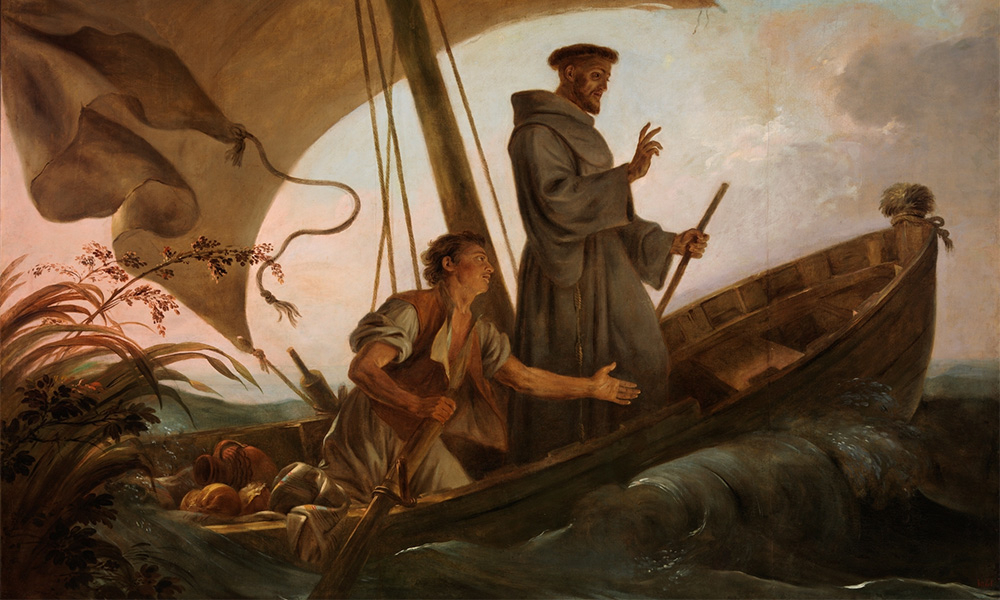
St. Francis of Assisi: Radically called by Christ
This October 3 marks the 800th anniversary of the “transitus,” the death of St. Francis of Assisi.
Francis is probably the most popular and beloved saint in the history of the entire Church. His universal appeal transcends all human divisions, whether they be political, ethnic, or religious. Everyone from environmentalists to hippies to pacifists to social justice advocates to traditional Catholics all find a resonant spirit in the poor man from Assisi.
This enduring attraction expressed by such divergent groups does not mean everyone understands St. Francis correctly or completely. Only by exploring his passionate and joyful love for Jesus Christ can one fully grasp the mystery of this simple man who died long ago in a culture and place far distant from ours.
The life of St. Francis
Born in 1182 to a prosperous cloth merchant, the young and carefree Francesco (Francis) Bernadone was the life of every party, always ready for an adventure and a good time with his friends.
His high spirits led him to be a knight in battles against the neighboring city-state of Perugia. He suffered wounds and imprisonment in the conflict and returned home ill and despondent.
In this place of sorrow and darkness, Francis felt the first stirring of God’s love in his heart and the call to live in a radically different way. The pivotal moment of his conversion came while praying in front of the Crucifix in a dilapidated chapel, when Francis heard the voice of Jesus, bidding him to rebuild His Church.
This call changed Francis’ life. He renounced his possessions, served the lepers outside Assisi, and preached the Gospel in the streets, living in such radical poverty that many people thought he had gone insane.
Francis never intended to found a religious order, but soon hundreds of men flocked to his side, as they saw in his life a joyous and fresh way to live the power of the Gospel. This Franciscan movement transformed the Church of his day, as Francis himself has continued to move and inspire countless people to love Jesus, serve the poor, and live in peace, wrapped in the ageless grace of the Holy Spirit.
Centered on the Lord
Jesus Christ, especially in His Incarnation and Crucifixion, is the center point of Francis’ entire existence.
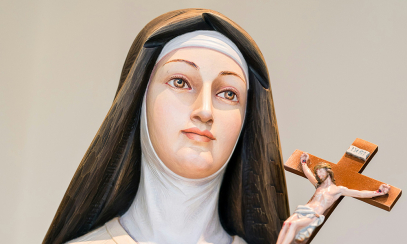
Moved by the Lord’s poverty and humility, both in His embrace of our humanity and His horrific death on the cross, Francis lived a burning devotion to Jesus so profoundly that he is the first recorded saint to receive the stigmata, the wounds of Christ in his body.
His equal passion for the Eucharist was a logical consequence of his love for Jesus. I am humbled in knowing that St. Francis thought himself unworthy to be a priest.
This joyful love for Christ spilled over into Francis’ tender care of the poor, the suffering, and the outcast, especially lepers. He literally saw Jesus in each person he met and served them with profound affection and sacrifice.
For the beauty of creation
He also viewed creation through a Catholic sacramental lens, recognizing God’s fingerprints in everything He had made.
His beautiful Canticle of the Sun is a poetic hymn of praise to God for Brother Sun and Sister Moon, Brother Fire and Sister Water, the stars and weather, and even death itself.
This Franciscan view of the world as a living extension of God’s beauty, truth, and goodness made Francis the patron saint of ecology and the environment.
Many Confirmation students also choose Francis as their patron saint because of his love for animals and creation. His love for all creation only finds its full meaning in the fact that God made everything that exists and that He found it good.
Francis loved people because they were made in the image of God, and he loved birds, planets, trees, clouds, and water because he saw the Lord’s fingerprints in the beauty, order, and glory of the world.
Embracing Christ in the world
Part of the enduring appeal of St. Francis lies in his ability to transcend the seeming dichotomies of his day: the rich and the poor, the Church and the world, joy and suffering, contemplation and action.
He saw in the intersection of the horizontal and vertical beams of the cross how Jesus Christ crucified is the center of all reality, in whom coheres human identity and purpose, the meaning of world history, and the integral beauty of all creation.
Francis has much to teach us about love and pain, exuberance and suffering, freedom and beauty, but the ultimate gift he offers us is the coherence and joy of a life radically centered in Jesus Christ.
Nothing about his life ultimately makes sense unless we see in him a heart completely captured by the Word made flesh.