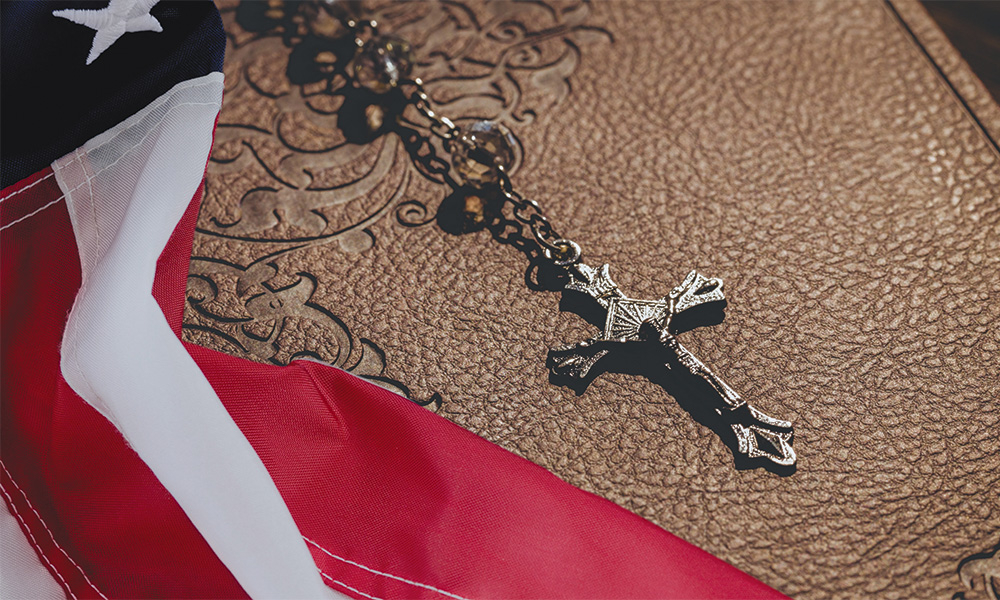
Voting as a faithful Catholic citizen
From the beginning of the Church, Catholics have sought to be good and faithful citizens of the countries in which they lived, rightfully seeing themselves as salt, light, and leaven in the world, striving to transform culture through the proclamation of the Gospel and the service of the common good.
The profound and wise principles of Catholic moral and social teaching should guide us in the practice of our citizenship.
An important part of being a good citizen is voting.
Participating in the political process in our country, as flawed and divided as it is, is essential if we seek to bring our society and culture into greater alignment with God’s plan and law.
We should approach the voting booth as Catholics first, Americans second, and, if members of a political party, third.
I would encourage everyone to pray over and discern the moral issues which lie before us before voting next month.
Read Forming Consciences for Faithful Citizenship, the voting guide offered by the United States Catholic bishops. It can be found at wisconsincatholic.org under the “Parish Resources” tab or by scanning the QR code at the end of this page.
The laity’s responsibility to form their conscience
The dignity of the human person and the sacredness of each life should be top of mind and heart for us.
Created in the image and likeness of God, known and loved by the Lord before we were ever formed in the womb, every human being has an absolute dignity and value, from the moment of conception to natural death.
Here in Wisconsin, we have seen the sadly successful efforts to reinterpret the state constitution to keep abortion legal, despite what is actually written in the law. In many states, euthanasia has been legalized.
We must elect political leaders who properly understand the dignity and worth of the human person, or else we will see the continued spread of the culture of death.
The truth and dignity of marriage and family are self-evident as the building block of our society and nation. Laws and programs which embrace marriage as God envisions it and support not only the birth but also the rearing of children are essential for our communities.
School choice has allowed parents of limited means to make the best educational decision for their children.
We know that education and employment are the two greatest factors in a person’s ability to transcend poverty.
Religious liberty enshrines freedom of conscience, the right to worship, and the right of religious organizations to serve the common good in the public square. A ballot initiative this fall speaks to that right.
How do we support single mothers and people with mental illness or drug addictions? How do we ensure health care for those who do not have it?
Government cannot be the solution for every social problem, but how can it help to lift people towards greater self-sufficiency?
Guidance from the Church
In all questions political and economic, the Church offers moral principles, ethical guidance, and points of reflection for Catholics and indeed all citizens of good will.
The Gospel is not inherently political, but its proclamation and embrace have implications for all of society.
The dignity, value, and flourishing of every human person are always front and center in the Church’s voice and action.
By knowing and following the natural law written in the human heart by God, all people can come to the right conclusions regarding who the human person is and what laws can best protect and promote a civilization of life, love, and justice for all.
The Declaration of Independence affirms the fundamental rights of life, liberty, and the pursuit of happiness to be self-evident and inalienable, given to us by our provident and wise God, so that we can embrace the authentically good life and flourish together as beloved children of the Father.
The more we live our Faith and moral principles in the public square, the better our country and communities will be.