What is discipleship?
We can begin answering this most important question by recalling when that the angel Gabriel appeared to a young Jewish woman and called her to be the first follower of Christ.
The Incarnation inspires us to respond to the divine call to believe in Jesus and respond with our whole mind, heart, and life.
In Mary’s “yes,” we see the first act of discipleship.
The Gospels go on to show many more examples in which Jesus calls others to follow him. There is a terrific detail in the Gospel of Mark: “He went up the mountain and summoned to himself those whom he wanted” (Mark 3:13).
As disciples of Jesus, we know we are not only called, but we are wanted by God.
There are distinct characteristics that set apart the lives of disciples.
We live sacramental lives, are steeped in Scripture and prayer, and live in the context of the Christian community.
In the Acts of the Apostles we read that the early disciples “devoted themselves to the teaching of the apostles, and to the communal life, to the breaking of the bread and to the prayers” (Acts 2:42).
A little more than a decade ago, Sherry Weddell published a book titled Forming Intentional Disciples: The Path to Knowing and Following Jesus, in which she provided a deep look into the life and state of the Church.
Her research showed that the numbers of those practicing the faith were grim (only about 24 percent in 2012).
She then hypothesized that the root of declining Faith in the Church is that many “so-called Catholics” have no personal relationship with Jesus Christ and thus have never truly become intentional disciples. This is a true crisis indeed.
She proposed a tool to gauge an individual’s closeness to Christ, which might be used to encourage a stronger personal relationship with Him.
She titled them “Thresholds of conversion.” These are stages that most people pass through as they become “intentional” about their commitment to a life of Faith.
It appears from Weddell’s research that many adult Catholics never progress through all the stages.
Her proposal was that knowledge of these thresholds will help us personally in our own journey and in our work to assist others in their journey of faith.
The thresholds include stages of trust, curiosity, openness, and seeking discipleship. But knowledge is not enough. She concluded that the most effective means of forming disciples is by the accompaniment of authentic witnesses who are willing to testify to Christ and transform their life.
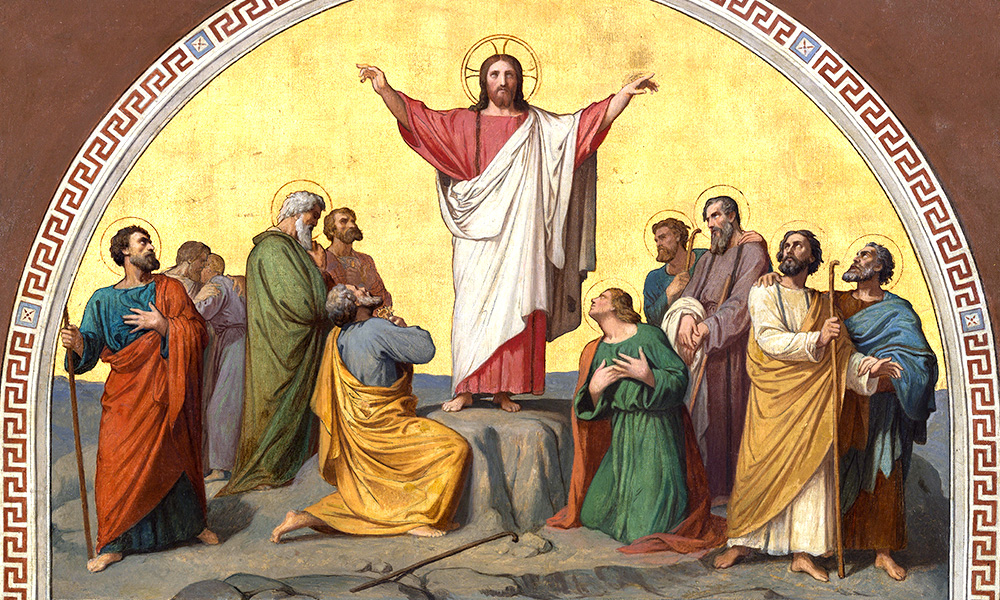
But it doesn’t stop there. Jesus calls us all to the work of evangelization as missionary disciples when He states, “Go, therefore, and make disciples of all nations, Baptizing them in the name of the Father, and of the Son, and of the Holy Spirit, teaching them to observe all that I have commanded you” (Matthew 28:19-20).
Disciples then become disciple makers.