Three traditional practices of Lent
This time of year, I often ask people what they are doing for Lent.
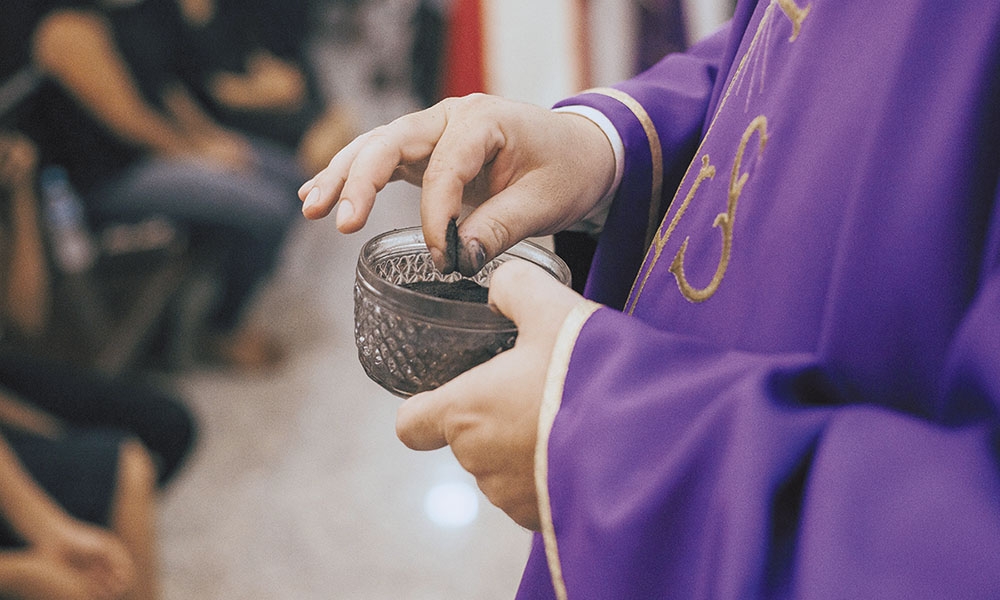
As we heard in Ash Wednesday’s Gospel, the Church bids us to pray, fast, and give alms in this penitential season of preparation for Holy Week and Easter.
These tried-and-true spiritual practices, helping us to grow in faith and charity, open us to go deeper in our relationships — with God, others, and our deepest self. Many people at least give something up for Lent as a sign of penance and mortification.
Whatever we are doing for Lent this year, we should remember that our efforts only create an inner space in our hearts and souls for God to work.
We are not performing some kind of spiritual calisthenics to impress the Lord or others with our holiness or heroism.
Lent, as indeed the entire spiritual life, is ultimately about God’s action and grace in our lives.
In the end, we do our part to clear out the inner clutter from our psyches and hearts so that God has greater freedom to abide and sanctify within our souls.
In some ways, spiritual growth is more about subtraction than it is about addition.
We need to be emptied out so that Christ can fill us.
What does that needed balance of doing our part and letting God do His look like through the prism of the three traditional practices of Lent?
Prayer
Let’s start with prayer. In the first stages of prayer, we do much of the heavy lifting, offering memorized prayers, doing spiritual reading, moving into meditation, perhaps on a Scripture passage.
Our effort is paramount and necessary. As we advance in prayer, however, the Lord wants to take over.
With practice, we gradually learn how to sit still, quiet our minds and thoughts, and listen to God in the silence.
It may often feel like nothing is happening at all. We may find ourselves distracted.
But, if we are faithful to such prayer, gradually the Lord will pray in us, as He quiets our senses to simply abide in the mystery of His hidden presence.
In your prayer this Lent, try doing less talking and more listening, less analysis of how you feel about your prayer and more a simple and quiet resting in His Heart.
Almsgiving
Regarding almsgiving, whether I am giving money, time, or effort to a charitable cause, I often want to see the effect of what I am offering.
I want my gift to be recognized. I want my charity to be noticed. Jesus invites us to forget about all of that.
To give sacrificially without expecting a reward or looking for a particular outcome is a beautiful way of doing our part and then letting God do His.
Let our generosity be hidden in the Lord, obscured from those around us. Perhaps, it will be more effective that way, because my ego won’t be getting in the way of God’s action.
Fasting
When it comes to fasting, whether it is refraining from eating or giving up a favorite treat, we can often become preoccupied with perfection.
Look God! I am going to perform this penance perfectly! Such thoughts remain centered on us and performance.
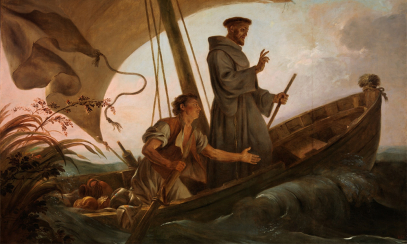
St. Francis of Assisi would do extraordinary 40-day fasts, but purposely break the fast on the 39th day, just so that he could not take pride in having done it perfectly.
A wonderful lesson for us: Our penitential and mortifying practices are not about performance or perfection, but rather a simple and humble way for us to clear our hearts, souls, and minds so that God has more freedom to take up His residence within us.
This understanding frees us from adopting an obsessive concern about how we are doing and opens us to a clarity of vision regarding what God is doing.
Let go and let God
As we move through this Lent, do your spiritual part for sure, but then let God do His.
He wants to love, forgive, heal, and transform us in new and powerful ways.
This holy and wonderful season is prime time to see what the Lord wants for each of us!
Let us pray for each other as we move through these exciting days.